BDD Excellence: Bridging the Gap with Cucumber and Java
2 years ago
•10 min read
112
15
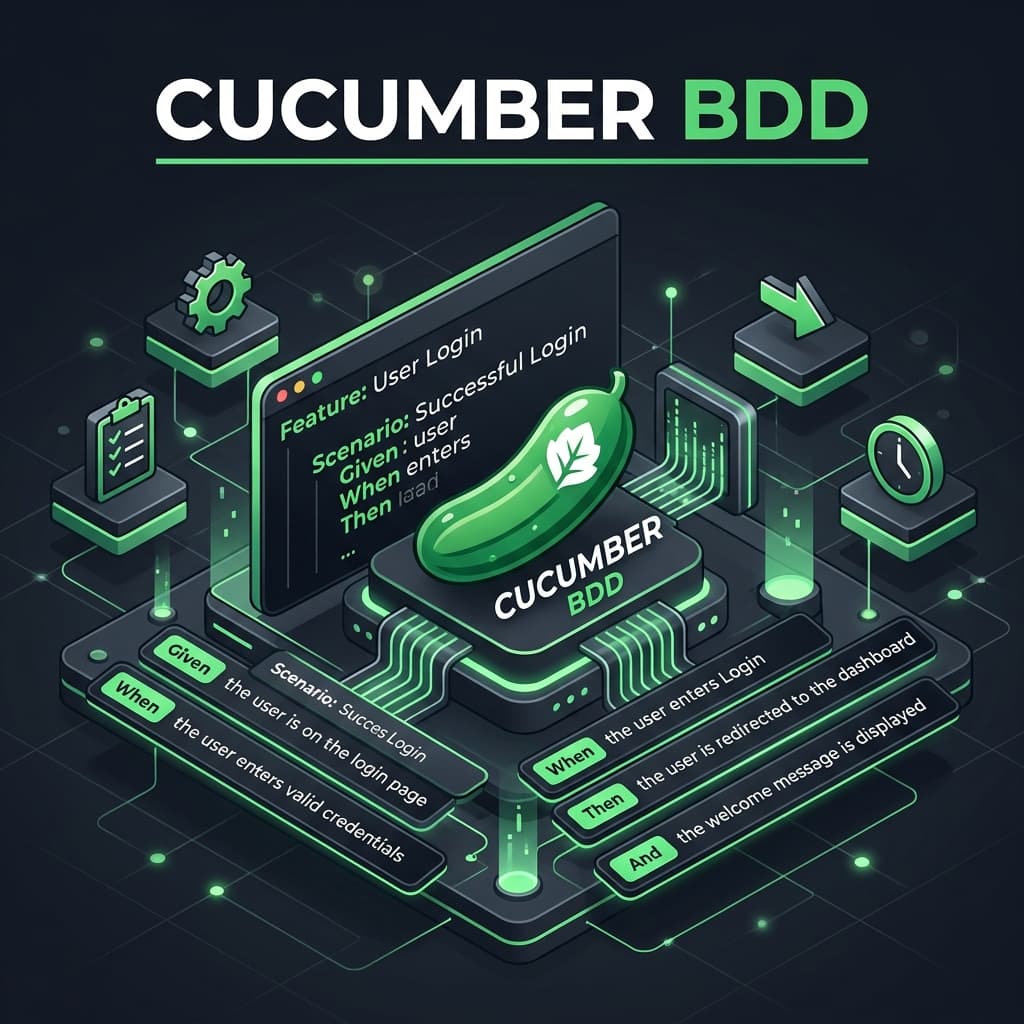
BDD Excellence: Bridging the Gap with Cucumber and Java
Behavior Driven Development (BDD) has transformed the way software teams communicate. It's not just about writing tests; it's about building a shared understanding between technical and non-technical stakeholders. In the world of enterprise QA, Cucumber combined with Java remains one of the most powerful stacks for implementing BDD.
The Core Philosophy of BDD
At its heart, BDD is about conversations. Before a single line of code is written, developers, testers, and product owners should agree on exactly how a feature should behave. These agreements are captured in Gherkin syntax—plain English (or other languages) that is both human-readable and machine-executable.
Writing Meaningful Feature Files
A well-written feature file serves as living documentation. Avoid overly technical language and focus on the "what" rather than the "how".
Feature: User Login
  As a registered user
  I want to log into the application
  So that I can access my dashboard

  Scenario: Successful login with valid credentials
    Given the user is on the login page
    When the user enters valid username "testuser" and password "password123"
    And clicks the login button
    Then the user should be redirected to the dashboard
    And a welcome message "Welcome back, testuser!" should be displayed
Implementing Step Definitions in Java
Step definitions are the glue between your Gherkin scenarios and your automation code. Using annotations, we map the English sentences to Java methods.
import io.cucumber.java.en.Given;
import io.cucumber.java.en.When;
import io.cucumber.java.en.Then;
import org.junit.jupiter.api.Assertions;

public class LoginSteps {

    @Given("the user is on the login page")
    public void navigateToLogin() {
        // Code to navigate to login page
    }

    @When("the user enters valid username {string} and password {string}")
    public void enterCredentials(String username, String password) {
        // Code to enter credentials
    }

    @Then("the user should be redirected to the dashboard")
    public void verifyDashboard() {
        // Assert current URL is dashboard
    }
}
Best Practices for BDD Success
- Don't over-complicate: Keep scenarios focused. A single scenario should test a single behavior.
- Avoid UI details in Gherkin: Instead of "clicks the blue button at the bottom", use "submits the form".
- Collaborate: If the Product Owner hasn't reviewed the feature files, it's not true BDD.
- Use Page Object Model (POM): Keep your step definitions clean by abstracting UI interactions into Page Objects.
Conclusion
When implemented correctly, Cucumber and Java provide a robust framework that brings clarity to complex projects. It ensures that the software you build is exactly what the business requested.